


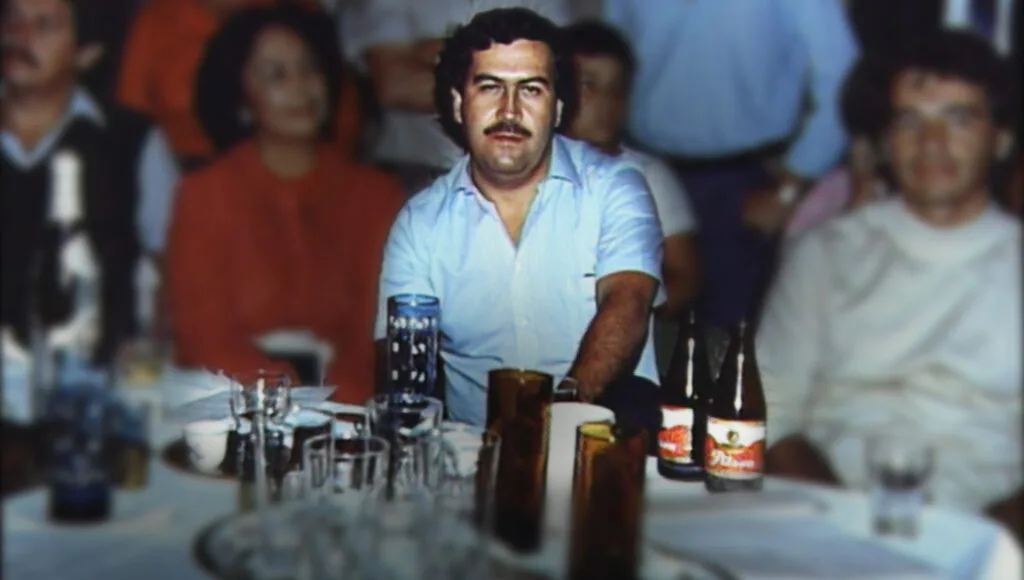
Pablo Escobar, the infamous Colombian drug lord, left an indelible mark on the world of crime and politics. Born on December 1, 1949, Escobar rose to become the King of Cocaine, amassing an estimated net worth of $30 billion, making him one of the wealthiest conventional criminals in history. As the founder and leader of the Medellín Cartel, Escobar’s reign in the 1980s and early 1990s dominated the cocaine trade into the US. His notorious crimes, coupled with his charisma and cunning, earned him a reputation as a narcoterrorist and a mastermind of the underworld.
Rise to Power: Early Crimes and Entrepreneurial Ventures
Pablo Escobar was born in Rionegro, Colombia, on December 1, 1949. His early life was marked by a brief stint at the Universidad Autónoma Latinoamericana of Medellín, where he studied but did not graduate. Instead, Escobar began to engage in a life of crime, selling illegal cigarettes and fake lottery tickets, as well as participating in motor vehicle theft. These early ventures laid the groundwork for his future career as a notorious figure in the world of organized crime.
Escobar’s transition to a life of crime was likely influenced by his surroundings in Medellín, a city known for its poverty and crime. The lack of opportunities and the presence of a thriving black market may have driven Escobar to seek alternative means of making a living. His early crimes were likely small-time, but they marked the beginning of a long and violent career that would eventually make him one of the most infamous figures in Colombian history.
As Escobar continued to engage in a life of crime, he honed his skills and expanded his operations. He quickly learned to adapt and evolve, always staying one step ahead of the law. His early successes would eventually pave the way for his rise to power as a major player in the world of organized crime, but for now, he remained a relatively small-time operator, struggling to make a name for himself in the shadows of Medellín’s underworld.
The Cocaine Kingpin: Medellín Cartel and Global Empire

Pablo Escobar’s reign as the “King of Cocaine” was marked by the establishment of the Medellín Cartel, a powerful and feared organization that dominated the global cocaine trade. As the founder and leader of the cartel, Escobar oversaw a vast network of smugglers, distributors, and money launderers, who worked tirelessly to supply the United States with an estimated 80% of its cocaine during the 1980s and early 1990s. This monopoly on the cocaine trade enabled Escobar to amass an enormous fortune, with estimates suggesting that he was worth a staggering $30 billion by the time of his death.
Under Escobar’s leadership, the Medellín Cartel expanded its operations to become a global empire, with tentacles reaching into every corner of the world. The cartel’s influence extended far beyond the borders of Colombia, with Escobar’s network of associates and operatives working to smuggle cocaine into the United States, Europe, and other major markets. This vast and complex operation was fueled by Escobar’s ruthless determination to maintain his grip on the cocaine trade, and his willingness to use violence and intimidation to protect his interests.
As the Medellín Cartel’s power and influence grew, so too did Escobar’s reputation as a mastermind of organized crime. His ability to evade capture and outmaneuver his enemies only added to his legend, and he became a figure of both fascination and fear in the world of international crime. Despite the efforts of law enforcement agencies to bring him to justice, Escobar remained at large for many years, his empire continuing to thrive and expand under his leadership.
Notorious Crimes and Controversies
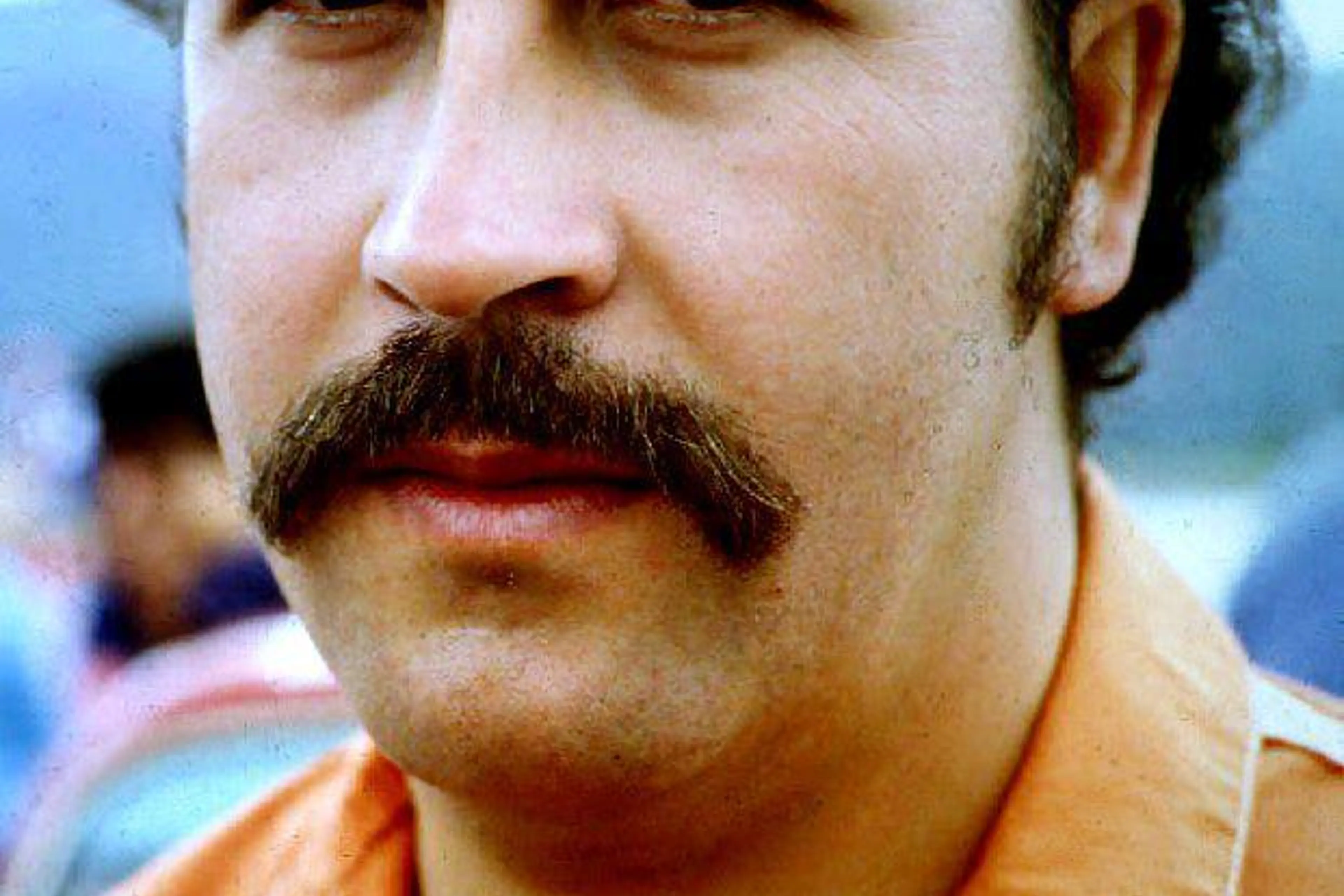
Pablo Escobar’s reign of terror left an indelible mark on Colombian society. As the leader of the Medellín Cartel, he orchestrated a campaign of murder, extortion, and terrorism that shook the nation to its core. Escobar’s cartel was responsible for the deaths of thousands of people, including politicians, judges, police officers, and innocent civilians. His tactics were ruthless and calculated, designed to instill fear and maintain control over the cocaine trade.
| Biography Aspect | Details |
|---|---|
| Full Name | Pablo Emilio Escobar Gaviria |
| Date of Birth | 1 December 1949 |
| Age | 44 years |
| Place of Birth | Rionegro |
| Nationality | Colombian |
| Occupation | Drug Lord, Narcoterrorist, Politician |
| Net Worth | $30 billion |
| Spouse / Partner | María Victoria Henao |
| Children | Juan Pablo Escobar, Manuela Escobar |
| Education | Universidad Autónoma Latinoamericana of Medellín |
| Notable Works / Achievements | Founder and leader of the Medellín Cartel, “King of Cocaine” |
| Other Relevant Details | Dubbed the “King of Cocaine”, one of the wealthiest conventional criminals in history |
One of the most notorious incidents attributed to Escobar was the bombing of Avianca Flight 203 in 1989, which killed 110 people. This act of terrorism was a deliberate attempt to assassinate presidential candidate César Gaviria, who had vowed to crack down on the cartel. The bombing was a stark reminder of the cartel’s reach and influence, and the devastating consequences of Escobar’s actions. Additionally, Escobar’s cartel was known for its brutal tactics, including the use of death squads and hitmen to eliminate rivals and enemies.
The impact of Escobar’s crimes on Colombian society was profound and far-reaching. His actions led to a breakdown in trust between the government and the people, and a sense of hopelessness and despair settled over the nation. The legacy of Escobar’s reign of terror continues to be felt today, serving as a stark reminder of the devastating consequences of unchecked power and corruption.
Personal Life and Relationships
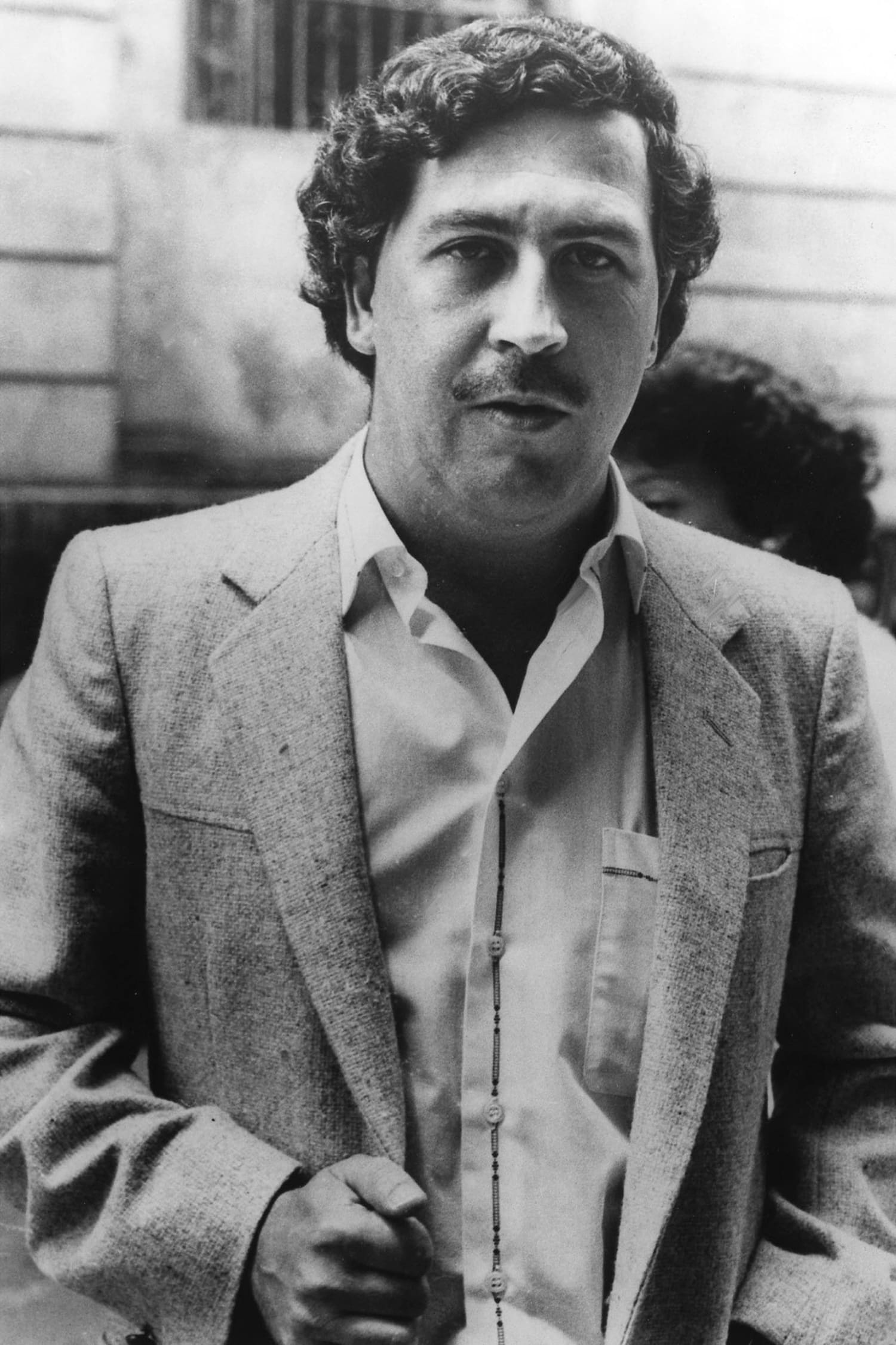
Pablo Escobar’s personal life was marked by a tumultuous marriage to María Victoria Henao, whom he met in 1976. The couple married in 1976 and had two children, Juan Pablo and Manuela. Escobar’s marriage to Henao was marked by periods of infidelity, with the cocaine kingpin reportedly having numerous affairs with other women. Despite this, Henao remained devoted to Escobar and stood by him throughout his rise to power and subsequent downfall.
Relationships and Infidelity
Escobar’s relationships with other women were numerous and well-documented. He was known to have had affairs with various women, including a Peruvian model named Luz Marina Henao, who bore him a third child, Sebastián Marroquín, in 1977. Escobar’s relationships with these women were often marked by lavish gifts and expensive vacations, reflecting his vast wealth and power. Despite his numerous affairs, Escobar’s marriage to Henao remained intact until his death in 1993.
Legacy and Impact
The lasting impact of Pablo Escobar’s crimes on Colombian society is a complex and multifaceted issue. The Medellín Cartel’s reign of terror, which was largely driven by Escobar’s leadership, left a deep scar on the country’s psyche. The cartel’s violent tactics, including bombings, assassinations, and extortion, created a culture of fear and intimidation that permeated every level of society. In the 1980s and early 1990s, Medellín was one of the most violent cities in the world, with a murder rate that was more than 10 times higher than that of New York City.
The efforts to bring Escobar to justice were a long and arduous process. In 1984, the Colombian government, with the help of the US, launched a campaign to dismantle the Medellín Cartel. The campaign, which included a series of military operations and intelligence gathering, ultimately led to the capture of many of Escobar’s top lieutenants. However, Escobar himself managed to evade capture for several years, using his vast resources and network of informants to stay one step ahead of the authorities.
In the end, it was a combination of the Colombian military’s relentless pursuit and the US’s offer of a reduced sentence that led to Escobar’s eventual death. On December 1, 1993, Escobar surrendered to the Colombian authorities, but he was able to negotiate a deal that would allow him to serve out his sentence in a maximum-security prison. However, Escobar’s escape from the prison on July 22, 1992, was a major embarrassment for the Colombian government, and it ultimately led to his death. On December 2, 1993, Escobar was killed in a shootout with Colombian police in Medellín. His death marked the end of an era, and it brought a sense of closure to the people of Colombia who had suffered so greatly at the hands of the Medellín Cartel.
The Fall of a Kingpin: Death and Aftermath
As the years went by, Pablo Escobar’s grip on power began to slip. The Colombian government, led by President César Gaviria, had been cracking down on the Medellín Cartel, and Escobar’s empire was starting to crumble. In 1991, a peace treaty was signed between the Colombian government and the guerrilla group M-19, which had been a key ally of Escobar’s. However, the treaty’s terms were unfavorable to the cartel, and Escobar saw it as a betrayal.
Escobar’s final days were marked by desperation and violence. He ordered the assassination of several high-ranking officials, including the presidential candidate Luis Carlos Galán, in an attempt to maintain his grip on power. However, his actions only served to further isolate him and his cartel. On December 1, 1993, Escobar’s brother, Roberto, was arrested by Colombian authorities, which led to a massive manhunt for Pablo. Escobar was eventually cornered in a Medellín suburb, where he was shot and killed by Colombian police on December 2, 1993, at the age of 44.
The aftermath of Escobar’s death was marked by a sense of relief and closure for the people of Colombia. The Medellín Cartel began to disintegrate, and many of its top leaders were either killed or captured. However, the damage had already been done, and the country would take years to recover from the trauma caused by Escobar’s reign of terror. The estimated value of Escobar’s assets, which had been frozen by the government, was put at over $10 billion, a fraction of his estimated net worth of $30 billion.